English| USD
Suggested for you
More currencies
Choose a language
Chacchoben's temples rise from the jungle floor with steep stone staircases that once carried priests to ceremonial platforms. Whether you can ascend those steps today depends on which structure you approach and the site's evolving conservation protocols. This guide clarifies access rules and what to expect when you visit.
Quick answer
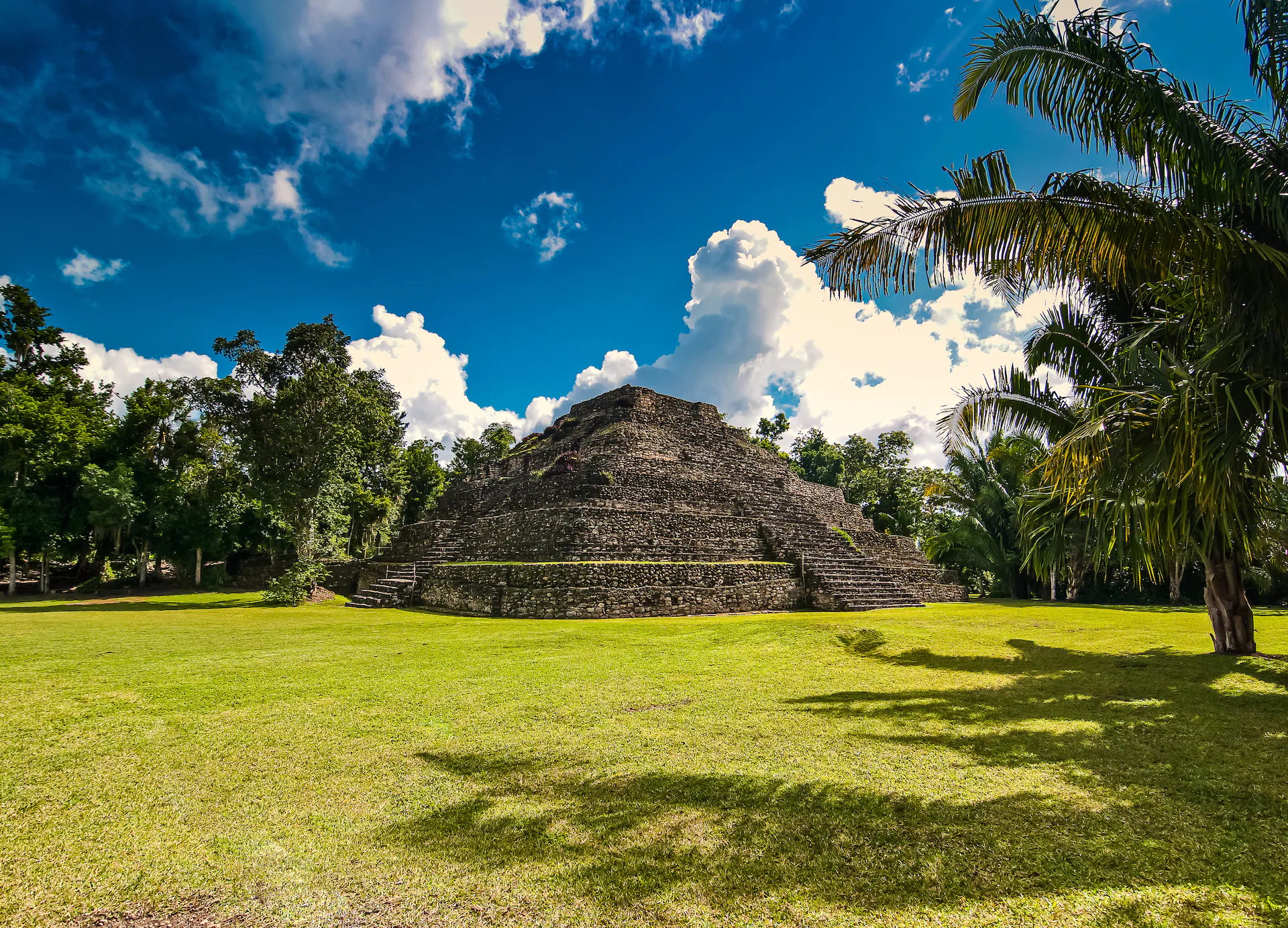
You cannot climb the main pyramidal structures at Chacchoben. The site implemented climbing restrictions to preserve the integrity of the stone facades and temple platforms. Visitors walk through the plaza level and approach the base of Temple 1 and the Gran Basamento, but roped barriers prevent ascent. Lower platforms and certain ceremonial areas remain accessible for close viewing, allowing you to study the architectural details and stucco remnants without scaling the primary monuments.
Chacchoben enforces stricter access policies than many Quintana Roo archaeological zones, a decision rooted in both conservation science and the site's restoration timeline. Temple 1, the tallest structure in the complex, displays original stucco masks that erode with foot traffic and moisture from human contact. The Gran Basamento's steep sides show fractures in the limestone facing, and site managers determined that repeated climbing accelerated the deterioration of mortar joints and carved elements. You can still walk directly to the base of each pyramid and examine the architectural transitions between Early and Late Classic building phases. The plaza layout reveals how the site expanded outward from the central acropolis, and the low platforms flanking the ball court remain open for study. Guides point out the raised causeways that connected residential zones to the ceremonial core, and you can trace those stone pathways without restriction. The site's scale feels intimate compared to Coba or Ek Balam, but that proximity to the structures offers a detailed view of construction techniques, from the rubble-core fill to the precisely cut veneer stones. Many visitors ask whether climbing restrictions at Chacchoben differ from those at neighboring sites. The answer lies in each zone's restoration status and structural stability. Coba permits ascent of Nohoch Mul because the pyramid underwent comprehensive reinforcement, while Chacchoben's temples remain mid-restoration with exposed stucco that cannot withstand the volume of cruise-ship foot traffic the site receives weekly. The archaeological record here emphasizes iconography over monumental height, and the best discoveries happen at eye level, where you can study the serpent masks and geometric friezes that decorated the upper facades. The question of whether you can climb the Chacchoben Mayan ruins resolves quickly once you see the physical barriers and signage at each structure. Site rangers enforce the policy consistently, and the layout naturally guides you along a ground-level circuit that takes forty to sixty minutes at a measured pace. The experience prioritizes horizontal exploration over vertical ascent, and the jungle canopy creates enough shade that the restriction rarely feels limiting. Photographers capture the temple profiles from the plaza without obstruction, and the absence of crowded staircases means clearer sight lines and fewer delays at each monument.
“The archaeological record here emphasizes iconography over monumental height, and the best discoveries happen at eye level.”
Climbing the structures at Chacchoben is strictly prohibited to preserve the archaeological site for future generations. Visitors must stay on designated pathways and follow site rules to protect the ancient stonework.
The Chacchoben archaeological site maintains a consistent schedule, operating daily throughout the week.
Everything you need to know about can you climb the chacchoben mayan ruins
No, you cannot climb the Chacchoben Mayan ruins to ensure the preservation of these historic limestone structures. Visitors are restricted to designated pathways that wind through the jungle and around the base of the pyramids.
The region offers several archaeological sites, but visitors generally must adhere to strict conservation rules at most protected Mayan landmarks in the Quintana Roo area.
Booking ahead is recommended to secure transportation and expert context for your Chacchoben excursion. While you cannot climb the Chacchoben Mayan ruins, having a guide helps you understand the significance of the Gran Basamento and other temple complexes.
Conservation efforts are in place because the structural integrity of these ancient pyramids is fragile. Protecting the stone masonry and archaeological history is the primary reason why you cannot climb the Chacchoben Mayan ruins.
The standard federal entrance fee is 95 MXN. This fee supports the maintenance and ongoing research of the site, which is managed as a protected archaeological zone.
Families are welcome to explore the site, provided children stay on the marked trails. Since you cannot climb the Chacchoben Mayan ruins, the experience focuses on wildlife spotting and observing the architectural details from ground level.
Unauthorized climbing is strictly prohibited to protect the site from erosion and damage. Site officials and guides enforce these rules to maintain the heritage of this important Mexican archaeological landmark.
Chacchoben Mayan Ruins Entrance Fees
Read more Tickets & toursChacchoben Mayan Ruins Tours from Costa Maya
Read more GuideMayan Ruins Near Costa Maya
Read more GuideWhere are the Chacchoben Mayan Ruins?
Read more GuideDistance from Costa Maya Port to Chacchoben
Read more Tickets & toursChacchoben Ruins & Bacalar Lagoon Tour
Read more